

The relationship between zinc oxide and skin microbiome health has become a focal point for cosmetic formulators, dermatologists, and pharmaceutical researchers. As one of only two sunscreen ingredients the FDA(Food and Drug Administration) deems it “safe and effective” in 2025, zinc oxide’s interaction with the skin’s bacterial ecosystem demands careful examination. This comprehensive guide synthesises the latest 2024-2025 research to provide industry professionals with actionable insights for product development and formulation decisions.
What is the Skin Microbiome?
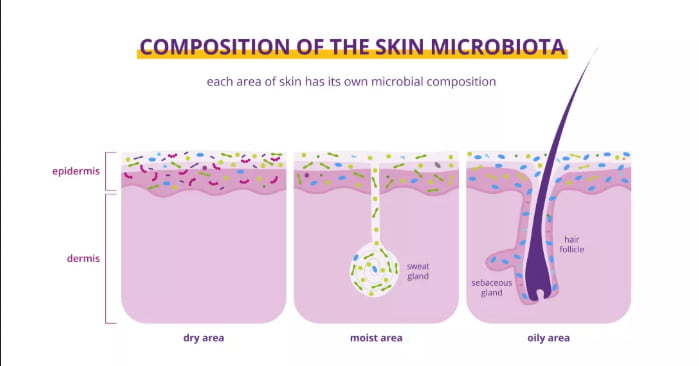
The human skin hosts over one million bacteria per square centimeter, forming a complex ecosystem known as the skin microbiome. This microscopic community consists primarily of three genera: Staphylococcus, Corynebacterium, and Cutibacterium (formerly Propionibacterium). These bacteria don’t merely coexist with our bodies, they actively protect against pathogens(any microorganism, agent, or “germ” such as a virus, bacterium, fungus, or parasite that causes disease in its host), regulate immune responses, and maintain skin barrier function.
When this delicate balance disrupts, conditions like acne, eczema, and dermatitis often follow. Understanding how topical ingredients interact with these microorganisms has become essential for formulating effective, skin-friendly products. Zinc oxide, long valued for its UV-blocking and antimicrobial properties, presents a unique case study in ingredient-skin microbiome interaction.
How Does Zinc Oxide Interact with Skin Bacteria?
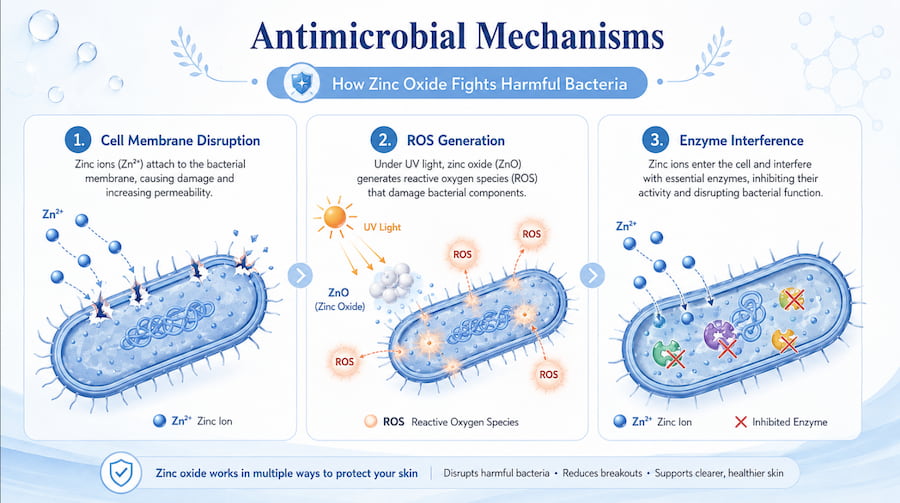
Antimicrobial Mechanisms Explained
Zinc oxide exerts its antimicrobial effects through multiple pathways. When applied to skin, zinc oxide nanoparticles release zinc ions (Zn²⁺) that penetrate bacterial cell membranes. These ions disrupt essential cellular processes through three primary mechanisms :
- Disrupting cell membrane integrity: Zinc ions bind to bacterial cell walls, causing structural damage and increased permeability
- Generating reactive oxygen species (ROS): Under UV light, zinc oxide produces ROS that damage bacterial DNA and proteins
- Interfering with enzyme function: Zinc disrupts bacterial metabolic enzymes, inhibiting growth and reproduction
Unlike broad-spectrum antibiotics that indiscriminately kill bacteria, zinc oxide demonstrates selective antimicrobial properties. Research published in Applied and Environmental Microbiology shows zinc oxide effectively targets pathogenic strains while preserving beneficial skin microbiota, a crucial distinction for maintaining healthy skin ecology.
Nanoparticle vs. Bulk Zinc Oxide
The particle size of zinc oxide significantly influences its microbiome interaction. Nano zinc oxide (particles under 100 nanometers) offers superior UV protection and deeper skin penetration compared to bulk forms. However, this enhanced penetration raises questions about microbiome impact.
A 2025 PMC study examining nano zinc oxide’s effects on skin bacteria found that coated nanoparticles, those treated with inert surface agents, demonstrate reduced antimicrobial activity compared to uncoated variants. This suggests coating technology may help modulate zinc oxide’s bacterial impact while maintaining UV protection benefits.
| Property | Nano Zinc Oxide | Bulk Zinc Oxide |
| Particle Size | Less than 100 nm | Greater than 100 nm |
| UV Protection | Strong broad-spectrum protection | Good UV protection |
| Skin Penetration | May interact more closely with the skin surface due to smaller particle size | Mainly remains on the skin surface |
| Antimicrobial Activity | Higher due to larger surface area | Moderate |
| Microbiome Impact | Potentially more significant | Generally less disruptive |
| Regulatory Status | EU SCCS approved for use in cosmetics up to 25% under specific conditions | Generally recognised as safe for common topical use |
Comparison of nano vs. bulk zinc oxide properties and microbiome interactions
What do the Latest Studies Reveal?
PMC 2025 Sunscreen Study: No Microbiome Disruption
A landmark study published in *Applied and Environmental Microbiology* in 2025 provides the most comprehensive human data on zinc oxide’s skin microbiome effects. Researchers exposed 20 healthy volunteers to sunscreen containing zinc oxide for 24 hours, then analysed bacterial diversity using both culture-based and sequencing methods.
Key Findings:
- No significant changes in alpha or beta diversity of skin microbiota
- Preserved bacterial populations of *Staphylococcus epidermidis*, *Cutibacterium acnes*, and *Corynebacterium* species
- Maintained skin barrier function throughout the exposure period
- No enrichment of resistant strains observed
This study directly counters earlier concerns that zinc oxide nanoparticles might disrupt skin ecology. The 24-hour exposure window, representing typical daily sunscreen use, showed zinc oxide sunscreen as microbiome-neutral, supporting its continued use in daily skincare formulations.
Axillary Microbiome Trial: Body Odor Applications
While sunscreen research shows microbiome preservation, a randomized double-blind placebo-controlled trial published in *Acta Dermato-Venereologica* reveals zinc oxide’s targeted antimicrobial potential for body odor control. Thirty healthy volunteers applied zinc oxide to one axilla and placebo to the other for 13 days.
Results demonstrated:
- Significant reduction in *Corynebacterium* species, the primary odor-producing bacteria (p<0.05)
- Decreased *Staphylococcus hominis* counts, another contributor to malodour
- Reduced self-perceived malodour compared to placebo (p=0.005)
- In vitro confirmation: Growth inhibition of *Corynebacterium* strains occurred at ≤400 mg/l zinc oxide concentration
This selective antimicrobial action, targeting odor-causing bacteria while preserving beneficial species, positions zinc oxide as an ideal ingredient for deodorant formulations seeking natural alternatives to aluminum compounds.
Safety Profile Updates: Regulatory Consensus
Both the U.S. Food and Drug Administration (FDA) and European Commission’s Scientific Committee on Consumer Safety (SCCS) have issued updated guidance on zinc oxide safety:
FDA Position (2025):
- Zinc oxide remains one of only two “safe and effective” sunscreen active ingredients
- No evidence of systemic absorption at concentrations up to 25%
- No microbiome disruption concerns at typical usage levels
EU SCCS Conclusions:
- Nano zinc oxide safe in sunscreens up to 25% concentration
- Coated nanoparticles preferred for reduced photocatalytic activity
- Safe for use in spray applications with proper formulation
What are the Benefits of Zinc Oxide
Sunscreen and Microbiome Balance
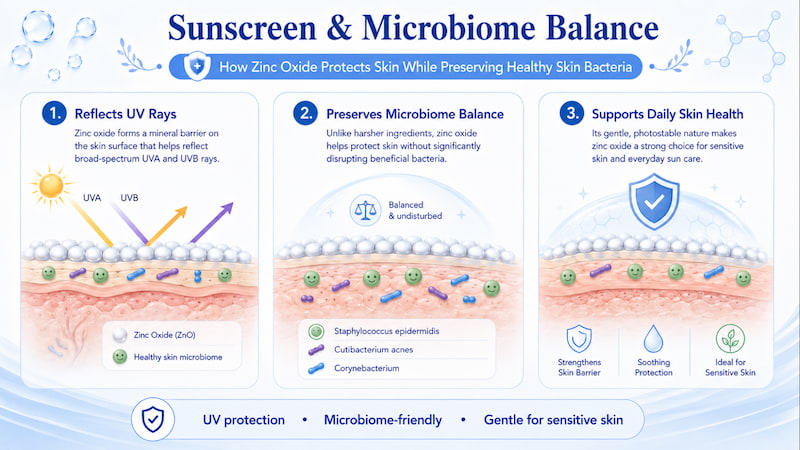
The 2025 PMC study’s finding that zinc oxide preserves skin microbiome diversity makes it the preferred UV filter for sensitive skin formulations. Unlike chemical sunscreens that may alter skin pH and bacterial balance, mineral-based zinc oxide provides protection without ecological disruption.
For formulators, this means zinc oxide sunscreens can be marketed as “microbiome-friendly”, a growing consumer concern. The ingredient’s inert nature on skin bacteria, combined with its photostability and broad-spectrum protection, creates a compelling value proposition for daily wear products.
Acne and *C. acnes* Management
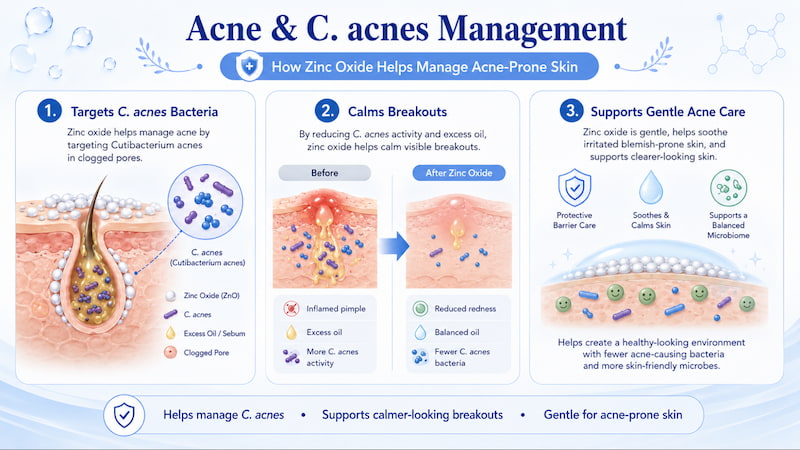
*Cutibacterium acnes* overgrowth contributes to acne development. Zinc oxide’s antimicrobial properties extend to this problematic species, making it valuable in acne treatment formulations. A 2025 study in the *International Journal of Pharmaceutics* demonstrated that hyaluronic acid-stabilized nano-zinc oxide effectively targets acne-prone areas, particularly sebaceous glands, without problematic skin penetration.
Formulation opportunities include:
- Spot treatments combining zinc oxide with salicylic acid
- BB creams with built-in acne-fighting properties
- Overnight masks leveraging zinc oxide’s sustained antimicrobial release
Body Odor Reduction: The Corynebacterium Connection
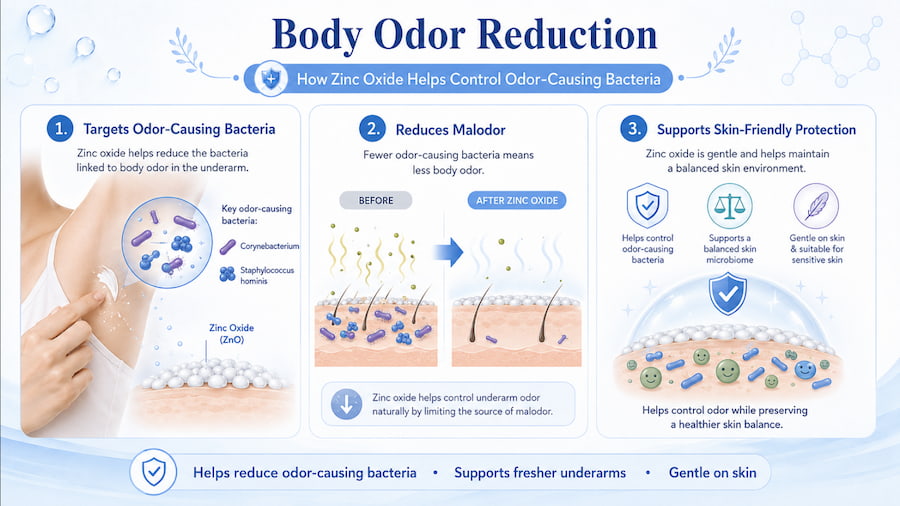
The axillary microbiome study’s findings open new formulation avenues. Zinc oxide’s selective inhibition of odor-producing *Corynebacterium* species, without disrupting beneficial *Staphylococcus* populations, makes it ideal for natural deodorant formulations.
Unlike aluminum salts that block sweat glands (potentially disrupting natural thermoregulation), zinc oxide works by targeting the bacteria responsible for odor generation. This mechanism aligns with consumer demand for “clean” personal care products that work with rather than against natural body processes.
Wound Healing Support
Beyond antimicrobial action, zinc oxide supports wound healing through multiple mechanisms:
- Anti-inflammatory effects: Reducing cytokine production at wound sites
- Epithelialization promotion: Accelerating new skin cell formation
- Barrier protection: Shielding wounds from external contaminants
These properties make zinc oxide valuable in medical-grade skincare, diaper rash treatments, and post-procedure healing products.
Safety and Regulatory Status: 2025 Update
FDA Position on Zinc Oxide
The FDA’s 2025 sunscreen monograph update reaffirms zinc oxide’s status as one of only two “safe and effective” UV filters (alongside titanium dioxide). Key points for formulators:
- GRASE (Generally Recognized As Safe and Effective) designation maintained
- No maximum concentration limit specified for zinc oxide
- Safe for all populations including children and pregnant women
- No photodegradation concerns unlike chemical UV filters
EU SCCS Nano Zinc Oxide Guidelines
The European Commission’s Scientific Committee on Consumer Safety provides specific guidance for nano zinc oxide formulations:
- Maximum 25% concentration in finished sunscreen products
- Coated nanoparticles recommended to reduce photocatalytic activity
- Particle size restrictions: Only nanomaterials with specific surface area ≤ 45 m²/g approved
- Labeling requirements: Nano ingredients must be listed as “[nano]” in EU markets
Coated vs. Uncoated Nanoparticles
Coating technology significantly impacts zinc oxide’s microbiome interaction and safety profile:
| Feature | Uncoated Nano ZnO | Coated Nano ZnO |
| Photocatalytic Activity | Higher, especially under UV exposure | Reduced due to protective surface coating |
| ROS Generation | More significant | Minimized |
| Microbiome Impact | Stronger antimicrobial effect, which may affect beneficial bacteria more | Gentler on beneficial bacteria |
| Regulatory Preference | Accepted when safety requirements are met | Often preferred for cosmetic and sunscreen formulations |
| Cost | Lower | Higher due to additional coating process |
*Table 2: Coated vs. uncoated nano zinc oxide comparison*
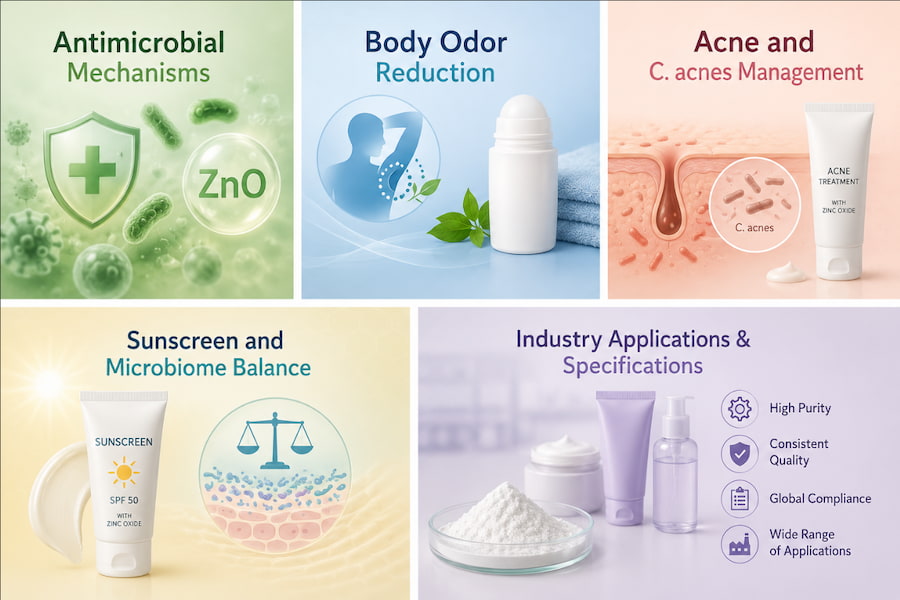
Industry Applications & Specifications
Cosmetic Grade Requirements
For cosmetic applications, zinc oxide must meet specific purity and particle size standards:
USP Grade (United States Pharmacopeia):
- Minimum 99.0% zinc oxide content
- Maximum 10 ppm lead content
- Particle size distribution per manufacturer specification
- Suitable for skincare and sunscreen applications
Pharmaceutical Grade:
- Higher purity requirements (typically 99.9%+)
- Stricter heavy metal limits
- Documented particle characterization
- Required for medical and therapeutic applications
Formulation Considerations
Successful zinc oxide incorporation requires attention to several factors:
Dispersion:
Zinc oxide particles tend to agglomerate. Proper dispersion using surfactants, dispersing agents, or mechanical milling ensures even coverage and optimal UV protection.
pH Stability:
Zinc oxide remains stable across pH 6-9, making it compatible with most skincare formulations. Extreme pH conditions may cause particle dissolution or aggregation.
Compatibility:
Zinc oxide generally plays well with other skincare ingredients, though interactions with acidic components (like AHAs) should be tested for stability.
Aesthetic Considerations:
Nano zinc oxide reduces the white cast associated with mineral sunscreens. Coated nanoparticles further improve spreadability and skin feel.
Conclusion
The 2024-2025 research consensus positions zinc oxide as a microbiome-friendly antimicrobial ingredient with broad applications in skincare, sun care, and personal care formulations. Unlike broad-spectrum antibiotics or harsh chemical treatments, zinc oxide demonstrates selective antimicrobial action, targeting problematic bacteria while preserving beneficial skin microbiota.
For formulators and product developers, this research validates zinc oxide’s continued use in daily wear products. The FDA’s “safe and effective” designation, combined with demonstrated microbiome neutrality in human studies, supports marketing claims around skin health and safety.
As consumer awareness of microbiome health grows, zinc oxide offers a scientifically-backed ingredient that delivers UV protection, antimicrobial benefits, and skin-friendly properties, all without disrupting the delicate bacterial ecosystem that keeps skin healthy.
For manufacturers looking for reliable Zinc Oxide Suppliers, Global Chemical Co., Ltd. is a strong option to consider. Established in Thailand in 1974, the company produces a range of zinc chemicals, including active zinc oxide, Zinc Oxide BP and USP grades, and nano zinc oxide for different industrial applications. Global Chemical also supplies customers locally in Thailand and exports to regions including Asia, United States, Australia, Europe, and Africa.
FAQ: Common Questions About Zinc Oxide and Skin Microbiome
Does zinc oxide kill good skin bacteria?
Research indicates zinc oxide selectively targets pathogenic bacteria while preserving beneficial skin microbiota. The 2025 PMC study found no significant disruption to healthy skin bacterial populations after 24-hour exposure.
Is nano zinc oxide safe for daily use?
Yes. Both FDA and EU SCCS have confirmed nano zinc oxide safety at concentrations up to 25%. The 2025 human volunteer study demonstrated no adverse effects or microbiome disruption with daily application.
How does zinc oxide compare to chemical sunscreens for microbiome health?
Zinc oxide appears more microbiome-friendly than many chemical UV filters. Its inert nature on skin bacteria, combined with lack of photodegradation byproducts, makes it preferable for sensitive skin and daily use formulations.
Can zinc oxide help with body odor?
Yes. Research shows zinc oxide effectively reduces odor-producing *Corynebacterium* bacteria in the underarm area while preserving beneficial *Staphylococcus* populations. This selective action makes it valuable for natural deodorant formulations.
What’s the difference between coated and uncoated zinc oxide nanoparticles?
Coated nanoparticles feature an inert surface treatment (typically silica or dimethicone) that reduces photocatalytic activity and ROS generation. This makes coated variants gentler on skin microbiome while maintaining UV protection. Uncoated nanoparticles offer stronger antimicrobial action but may be more disruptive to beneficial bacteria.
Does zinc oxide penetrate the skin barrier?
Studies show minimal systemic absorption of zinc oxide nanoparticles through intact skin. The particles primarily remain on the skin surface or within the stratum corneum outer layers, limiting internal exposure.
Can zinc oxide help with acne?
Zinc oxide demonstrates antimicrobial activity against *Cutibacterium acnes*, the bacteria associated with acne development. A 2025 study showed hyaluronic acid-stabilized nano-zinc oxide effectively targets acne-prone sebaceous glands without problematic penetration.
What concentration of zinc oxide is safe for skin?
The EU SCCS approves nano zinc oxide up to 25% in sunscreen products. The FDA imposes no specific limit, considering zinc oxide safe at typical usage levels (5-20% in most formulations).
Does zinc oxide expire or lose effectiveness?
Zinc oxide is photostable and doesn’t degrade with UV exposure, unlike chemical sunscreens. However, formulation stability depends on other ingredients and packaging. Most zinc oxide products maintain effectiveness for 2-3 years when stored properly.
Is zinc oxide reef-safe?
Unlike oxybenzone and octinoxate (chemical UV filters linked to coral bleaching), zinc oxide is considered reef-safe, particularly in non-nano formulations. Hawaii and other jurisdictions specifically permit zinc oxide in reef-friendly sunscreens.
Can zinc oxide be used with other active ingredients?
Zinc oxide is generally compatible with most skincare actives including niacinamide, hyaluronic acid, and peptides. However, combining with highly acidic ingredients (pH <4) may affect particle stability and should be tested.
How does zinc oxide benefit wound healing?
Zinc oxide supports wound healing through antimicrobial protection, anti-inflammatory action, and promotion of epithelialization (new skin cell formation). These properties make it valuable in medical ointments and healing balms.
What makes zinc oxide different from titanium dioxide?
While both are mineral UV filters, zinc oxide provides broader spectrum protection (UVA and UVB) compared to titanium dioxide (primarily UVB). Zinc oxide also demonstrates stronger antimicrobial properties, making it preferable for acne-prone skin formulations.
Are there any populations who should avoid zinc oxide?
Zinc oxide is considered safe for all populations, including children, pregnant women, and individuals with sensitive skin. The FDA’s GRASE designation confirms its safety profile across demographics.
