

Zinc oxide is more than a white pigment in a paint formulation. It can offer UV management, aesthetic qualities, and some protective features as long as the formulation as a whole is compatible. These features become relevant when the coating is required to resist the effects of the sun, moisture, oxygen, temperature changes, and other aggressive chemicals without losing its aesthetic qualities.
The value of zinc oxide to the paint formulator comes in the form of interactions between the physical and chemical properties of the material itself and the formulation as a whole. The particle size, purity, surface area, dispersion, binder chemistry, pigment volume concentration, and curing process are all key considerations. Zinc oxide is a functional material and not a commodity where each grade is the same.
When searching for zinc oxide Thailand for paint manufacturing, the first step is to identify a grade with documented properties that will work for the intended coating application. This document covers the role of zinc oxide in durability and color retention and describes the requirements of the technical teams when choosing a grade from Global Chemical.
Why do paint formulators use zinc oxide?
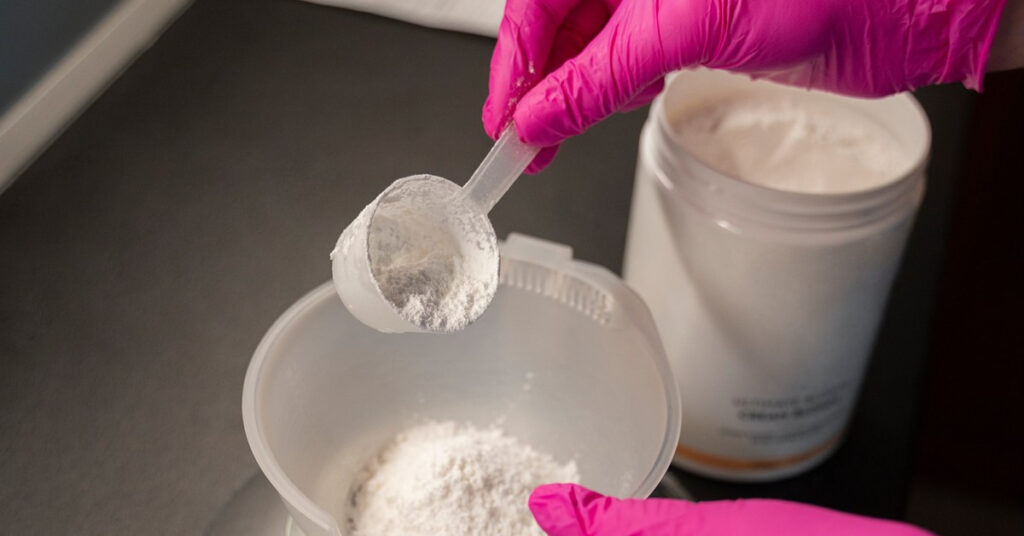
For a long time, zinc oxide was recognized as an important component for making coatings, thanks to its valuable characteristics such as optical, chemical, and functional features. Its optical feature lies in whiteness which provides opacity and luminance while the chemical one may ensure protection in case of certain resin systems. This element is highly valued in special coatings which have resistance to light, surface degradation, and corrosion.
The following statement is totally wrong: the use of the element depends only on its zinc oxide percentage content. There will be two elements of different efficiency if they have similar percentage content. It happens due to their difference in shape, agglomeration, surface treatment, water content, purity, production consistency, etc. It is also affected by dispersing, viscosity, gloss, hiding power, and storability of the paint.
In the case of the manufacturer of paints, when he assesses the element, he assesses the element with the rest of the ingredients including titanium dioxide, extenders, anti-corrosives, dispersants, defoamers, and the chosen binder. The objective is not to maximize any particular component but to find a balance between protection, aesthetics, application properties, cost, and long-term film performance.
Key priorities during formulation are:
- Appearance: Whiteness, color consistency, gloss, and hiding.
- Processing: Wetting, dispersion, viscosity, and storage stability.
- Protection: Verified weathering and substrate performance in the complete coating.
How does zinc oxide support coating durability?
Durability refers to the extent to which the film retains its protecting and aesthetic properties. A durable film will not be chalking, cracking, blistering, losing adhesion, staining, and so forth. Zinc oxide can help meet some requirements for durability, but the binder, substrate preparation, pigments, and design of the film are important factors.
UV screening and scattering
The effects of sunlight may cause degradation of the binder or colorants, which would cause discoloration, loss of gloss, chalking, and embrittlement. Zinc oxide is a good absorber of ultraviolet light and can also scatter light, depending on the particle size and the coating formulation. Fine zinc oxide grades are not always effective in light scattering and hiding as compared to the traditional pigmented grades. Loading, dispersion, binder compatibility, and potential photocatalytic effects must all be assessed: UV absorption alone does not establish better outdoor weathering performance.
Corrosion control on metal substrates
Zinc oxide cannot be used as a substitute for metallic zinc in zinc-rich primers or in place of zinc phosphate, which is another anti-corrosive pigment. ZnO may play a formulation-specific supplementary role in certain protective systems, but it cannot be said that it offers sacrificial protection against corrosion. Corrosion resistance must be determined with respect to the metal substrate and pre-treatment, the binder, film thickness, and exposure conditions of the paint film. It cannot be inferred from the presence of zinc oxide alone.
Moisture management and adhesion
Water can get into the coating via pores, flaws, edges, and continuous condensation. The moisture resistance and adhesion characteristics of the coating depend mainly on its capability of creating an effective film, substrate preparation, and choice of a particular binder. Zinc oxide will not necessarily improve any of these factors; the coated panels need to be compared after exposure to humidity or water to assess the usefulness of the proposed grade.
How does zinc oxide improve color retention and appearance?

Color retention means the maintenance of the coating film close to its initial shade for the whole period of use of the coating. Color fading can be caused by exposure to UV, oxidation, degradation of pigment, breakdown of the binder, dirt pick-up, and chemical effects. The influence of zinc oxide on color retention is connected with its action on UV light in correct systems; nevertheless, in case of poor dispersibility or incompatibility with the binder, zinc oxide can have a neutral or negative influence on color retention.
The visual appearance depends on the interactions of pigments and binders. Zinc oxide can influence the tinting strength, undertone, opacity, gloss, and light scattering of the coating film. In a mixture with organic and inorganic coloring agents, zinc oxide must disperse well to provide good consistency of the color of the obtained coating, regardless of the lot. Poor dispersion results in speckling, floating, flooding, haziness, and poor hiding properties even in the case of chemically acceptable raw material.
Assess the color after accelerated weathering, and not only immediately after coating application. Compare ΔE or other color difference metrics, gloss retention, chalking, and surface appearance of the candidate formulas at production film thickness and method of application.
Which zinc oxide grade is right for your coating?
Grade choice depends on the use of the coating in question. For instance, architectural interior paint, architectural exterior decorative paint, industrial metal primer, marine coating, wood finish, and special protective coatings have varying requirements as far as purity, surface area, particle size, whiteness, reactivity, and moisture content are concerned.
If the presence of trace amounts of metal or other impurities may influence the color, stability or reaction, then a highly pure grade should be chosen. Finer grades may be preferable for surface interaction and optical properties, but may lead to dusting, agglomeration, increased viscosity or dispersant requirement. The best grade is predictable in production process, not simply the one with the smallest particles.
Surface area is one specification worth comparing. Global Chemical reports a surface area of 30–50 m²/g for its Active Zinc Oxide and 3–5 m²/g for its normal White Seal Zinc Oxide. These specifications apply to the respective product categories and should not be assumed to represent every zinc oxide grade.
While the Active Zinc Oxide is primarily intended for use in rubber products, the application of the material in paints must be based on technical data and formulation trials. The paint producers must select the industrial or technical grade of the material that is suitable for their binder systems rather than selecting pharmaceutical grades such as zinc oxide BP or cosmetic-grade zinc oxide. Different grades have different quality requirements, and suitability for one type of application does not automatically mean suitability for other applications.
Zinc oxide grade-selection checklist
| Selection factor | What to check before choosing a grade |
|---|---|
| Coating application | Interior, exterior, primer, marine, or specialist service conditions |
| Visual targets | Whiteness, undertone, gloss, and hiding requirements |
| Particle characteristics | Particle size distribution, surface area, and likely dispersion demand |
| Chemical consistency | Purity, moisture, and trace-metal limits |
| Binder compatibility | Potential interactions with driers, dispersants, and other additives |
| Supporting documents | Current technical data sheet, certificate of analysis, and representative sample |
Use these checks to shortlist grades; do not treat a single specification, such as surface area, as proof of better coating performance.
How should you control dispersion in your formulation?
Dispersion is probably the most common reason for underperforming behavior of an otherwise excellent raw material. Zinc oxide has to be wetted and dispersed within the mill base without creating any durable agglomerates. The proper choice of the dispersant, mixing schedule, shear profile, and let-down method is dependent on the resin and the solvent or the liquid phase.
Take more tests than grind gauge alone. Test viscosity at appropriate shear rates, density, gloss, hiding power, tinting strength, storage stability, and re-dispersibility. Don’t forget about settling or hard pack in the container because although the coating will look perfect straight from production, it may not be easily redispersible after sitting around in storage.
Also check for interactions with acid or base additives, driers, corrosion inhibitors, coalescents, and other pigments. The use of zinc oxide might cause a change in pH, drying time, or storage stability. Zinc carboxylate (zinc soap) formation is a common problem for oil-based binder systems, as it causes deterioration in historic oil-paint films; it is not evidence of the same problem in all commercial coatings. Check the intended binder system for chemical compatibility and ageing effects rather than assuming the problem for all resin binders.
Common dispersion problems: quick troubleshooting guide
| What you observe | Where to investigate first |
|---|---|
| Agglomerates or visible specks | Wetting agent, addition order, milling time |
| Viscosity rise or gelling | Dispersant demand, thickeners, and pH-sensitive additives |
| Settling or hard pack | Grind fineness, rheology modifiers, anti-settling additives |
| Floating, flooding, or haze | Colorant compatibility and shear profile during let-down |
These are starting points for diagnosis, not confirmation of the root cause. Recheck any adjustment against storage stability and finished-film properties.
How do you test durability before commercial release?
An effective programme will start from a control formula and at least one variation of zinc oxide. It should be assured that conditions of applying, substrate surface preparation, film thickness, curing time and conditioning are equal and there is a standard pigment to use as a comparison sample in order to understand whether the introduced element is really valuable.
Tests can be selected depending on environmental conditions in which coating will be applied. For ageing under exposure to light and moisture, the ASTM D4587-23 specifies the method of the test of paints and other coatings by means of fluorescent UV-condensation exposure; it is necessary to give more details regarding exposure cycle, irradiance, time and equipment and not just refer to a test standard alone. If it is appropriate, humidity, adhesion, hardness, water immersion and corrosion testing can be included using a method suited to the substrate and failure mode. Resistance to salt spray test alone does not prove the service life outdoors. For exterior products, use natural exposure panels alongside accelerated ageing where practical.
Record performance at predetermined intervals. A compact scorecard helps the team compare each variant against the control:
| Performance measure | What it helps reveal |
|---|---|
| ΔE color difference | Degree of color shift following exposure |
| Gloss retention | Change in surface appearance and finish |
| Chalking and cracking ratings | Visible weathering and film degradation |
| Adhesion and blistering | Loss of film integrity after relevant exposure |
| Corrosion observations, where applicable | Changes on the specified metal substrate and pretreatment |
Set acceptance limits from the product specification and control formulation; there is no universal acceptable ΔE or exposure duration for every coating. For further background, see Global Chemical’s overview of zinc oxide as a white pigment in paints, coatings, and plastics.
Results should be interpreted relative to the customer’s failure mode. Color retention could be most important in the case of a high-end architectural finish, while adhesion and corrosion resistance would become the key parameters for an industrial primer. Translate laboratory data into a clear specification that production can repeat.
What should you ask a zinc chemical supplier?
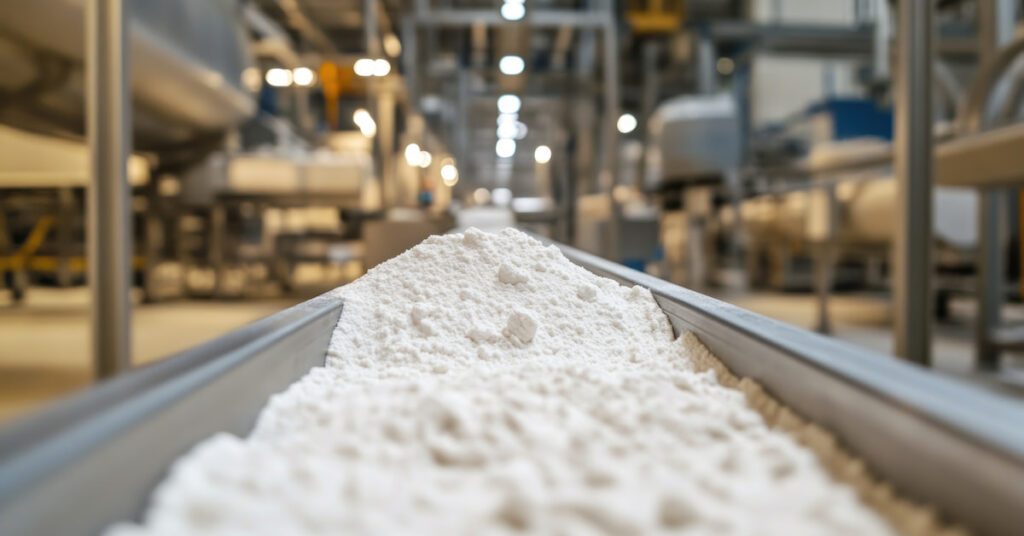
Good suppliers provide value in terms of consistency, documentation, and technical communications. Global Chemical provides zinc chemicals in several grades, which include standard, active, and nano zinc oxide. Various grades might be marketed for various industries. Be sure to verify the availability of coating-specific data and suitability for your particular binder and application.
In selection of zinc oxide manufacturers, ensure that batch certificates meet acceptance criteria, multi-lot sampling is available, and packaging, shelf-life, and volume requirements are known. Consistency of manufacture is more important than a supplier label alone.
When comparing options for zinc oxide Thailand procurement, start with relevant technical documentation. When approaching zinc oxide suppliers in Thailand, share the substrate, binder, application method, target appearance, and expected exposure. Ask what coating-relevant documentation or trial samples are available instead of assuming a grade developed for another industry will translate directly into paint.
Supplier questions to ask before ordering
- Grade specifications: What particle size distribution, surface area, purity, and moisture limits are specified?
- Batch consistency: Which results appear on each certificate of analysis, and how are changes controlled?
- Trial samples: Are representative samples, including multiple production lots where possible, available?
- Storage and logistics: What packaging, shelf life, and storage conditions are recommended?
- Supply and support: Can forecast volumes be supported, and what coating-specific documentation or assistance is available?
How should you plan a practical zinc oxide trial?
- Define the specific failure mode: fading, chalking, corrosion, adhesion loss, or other appearance or protection failure.
- Shortlist coating-suitable grades using current technical data sheets; confirm that each supplier’s claimed application is relevant.
- Prepare a control and trial variants at consistent film thickness, application method, curing conditions, and substrate preparation.
- Screen dispersion, viscosity, appearance, storage stability, and binder compatibility before advancing to exposure tests.
- Apply the relevant exposure-test plan described above, with predefined acceptance criteria; add natural exposure for exterior applications where feasible.
- Record test conditions, outcomes, and lot numbers, and document any trade-offs against the control.
- Convert a successful trial into a production specification, then confirm lead times, packaging, and supply requirements.
One shared specification keeps R&D, quality, and procurement aligned and gives the supplier what it needs as volumes grow.
Conclusion
As far as paint formulation goes, the relevant issue is not whether zinc oxide offers interesting features on its own, but whether a specific grade can enhance the efficiency of a specific coating. Select suitable binder grades, control dispersion and compatibility, and use comparative testing to establish any durability or color-retention benefit.
To explore available products, visit Global Chemical, a trusted source for zinc oxide thailand, and request current technical documentation for the grade you intend to evaluate. Confirm sample availability and application-specific technical support directly with the supplier.
FAQ
What does zinc oxide do in paint?
It is an inorganic white substance that could have optical and UV properties in some types of paint. Its role in coating protection or longevity is dependent on the whole system, and it should not be expected to provide antimicrobial or corrosion resistance without specific application evidence.
Can zinc oxide prevent paint from fading?
This will assist an engineering coating to withstand certain causes of fading, especially those associated with ultraviolet light, but this cannot be considered a universal fade-resistant approach. Colorant selection, binder stability, film thickness, and exposure are significant factors; therefore, a comparative weathering test of the entire system is the reliable method.
Is zinc oxide suitable for exterior paint?
It will work well if the grade and formula are appropriate for the exposure. Test for UV, moisture, color change, gloss, adhesion, and chalking on the intended substrate and film build. A supplier’s data sheet is a starting point, not a substitute for finished-coating validation.
Which zinc oxide grade works best in paints?
Not every grade is applicable to every type of coating. There are different types of standard, active, and nano grades with varying properties and uses, and not all of them can be used in paint products. Verify suitability with current grade-specific documentation and controlled trials.
How does zinc oxide work with titanium dioxide in coatings?
In general, titanium dioxide is the main hiding pigment in ordinary white paints. Zinc oxide can be analyzed as another functional ingredient rather than a full-fledged substitute. The effect on UV properties, aesthetics, price, and aging should be determined for the whole composition.
