

Zinc oxide is known to be able to hinder the development of microorganisms, but there is more to its effectiveness than just the grade stated on the specification sheet. The properties of particles, their concentrations, the dispersion, and even the final formulation are among the factors that affect the outcome.
When selecting zinc oxide BP for the teams, there are two questions that need to be answered separately: Is the substance of the desired quality standard? Does it possess the required antimicrobial effect? The scientific literature will give an answer to the first question, and the batch documentation and application testing will give an answer to the second question to establish whether a particular material fits the product.
What Is Zinc Oxide BP, and Why Does the Grade Matter?
Zinc oxide (ZnO, CAS 1314-13-2) is an inorganic compound, available in powder form that ranges from being white in color to slightly yellow in appearance. “BP” signifies compliance with the requirements of the respective British Pharmacopoeia (BP).
The BP specifies quality standards for pharmaceutical substances and medicinal products. Buyers have to know about the relevant BP edition and requirements for establishing the specification (British Pharmacopoeia, n.d.). Note that USP conformity refers to a separate pharmacopoeial standard and should be confirmed independently.
The specification for zinc oxide has to be specified during procurement on the basis of the relevant monograph: method of identity test, assay ranges and calculations, purity requirements, and other mandatory tests. The results of the tests performed on the batch have to be presented in the CoA document, showing the batch results alongside acceptance criteria, clearly separating test results from compliance claims.
Compliance with BP criteria does not mean efficiency in microbials. Compliance with GMP requirements, particle parameters and suitability for the specific product has to be proven separately. Just “technical grade” does not ensure compliance with pharmacopeial or cosmetic criteria.
The limits given by the BP are numerical criteria; one cannot rely on general information as a substitute for the official monograph. One has to start with the intended product and destination market, then agree to the specification.
How Does Zinc Oxide Kill Bacteria?
Three interrelated mechanisms have been recognized: reactive oxygen species production, release of zinc ions, and membrane damage. Their relative contribution varies depending on the material, microorganism, and testing conditions (Mendes et al., 2022; Naqvi et al., 2019; Xie et al., 2011).
| Mechanism | What happens | What affects its contribution |
|---|---|---|
| Reactive oxygen species, or ROS | Reactive species can damage membrane lipids, proteins, and other cellular components. | Light, surface defects, coatings, and the surrounding medium |
| Zinc-ion release | Dissolved Zn²⁺ can interfere with enzymes and cellular processes when exposure becomes excessive. | Dissolution, pH, concentration, and formulation chemistry |
| Membrane interaction | Particle contact can disturb the bacterial envelope and increase permeability. | Particle characteristics, dispersion, and access to the cell surface |
ROS can damage membrane lipids
Tiwari et al. (2018) examined the action of ZnO nanoparticles on carbapenem-resistant Acinetobacter baumannii and found a significant increase in ROS generation as well as membrane lipid peroxidation following treatment, supporting oxidative damage as a mechanism in that experimental system.
Released zinc ions can disrupt cellular processes
Nevertheless, despite zinc being essential for living organisms, high amounts could affect the proper functioning of microbes. As per Naqvi et al. (2019), the antibacterial properties observed in engineered ZnO nanoparticles were based on zinc ions’ release as well as the production of ROS associated with surface defects. Variations in dissolution rates and accessibility of the particle surface may influence microbial exposure.
Particle contact can compromise the membrane
Xie et al. (2011) investigated the role of ZnO nanoparticles against Campylobacter jejuni. They found that both membrane damage and oxidative stress are supported as contributors to the antibacterial activity.
These studies explain plausible mechanisms of action rather than defining a universal killing rate for any grade or formulation.
Does Particle Size Change Antimicrobial Strength?
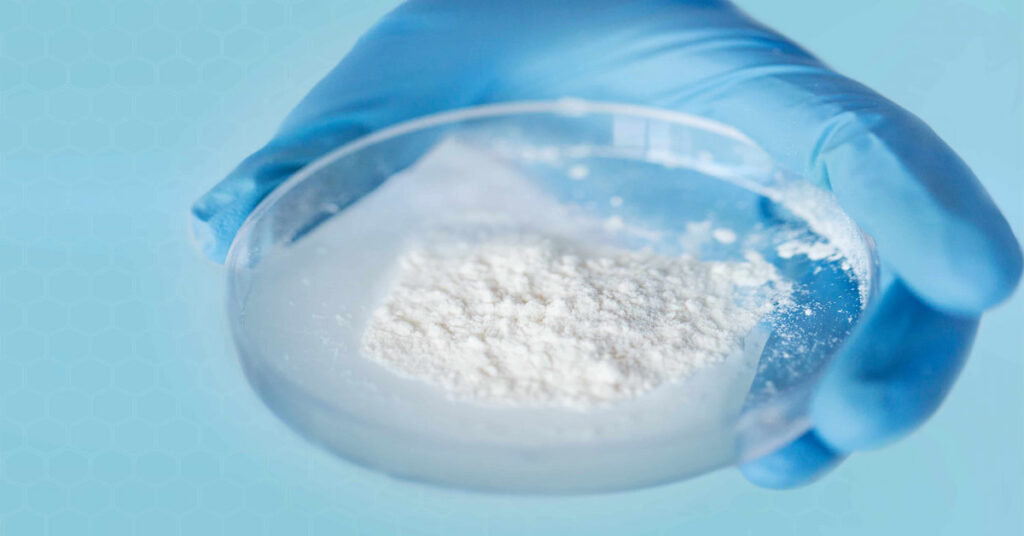
Smaller-sized particles have higher antibacterial activity in tests in the lab partly due to larger amounts of surface area for mass ratio. Higher surface area might impact contact with microbes, dissolution, and reactions at surfaces.
However, the research of Raghupathi et al. (2011) showed the higher antibacterial activity of the nanoparticles in the Staphylococcus aureus test at smaller sizes, as well as activity under ordinary illumination, not requiring any UV irradiation. These findings apply to the tested materials and conditions.
For formulation decisions, consider three characteristics of the materials:
- Particle size distribution: The mentioned nominal particle size is not a full description of the distribution of particles or agglomeration that may occur in the processing.
- Surface treatment: A coating may provide better compatibility but also influence the surface reactivity and microbial interaction.
- Dispersion: Agglomerated poorly dispersed particles will behave differently than a well-dispersed laboratory suspension.
The micron, fine and nano-grade of the powder should be compared to the product brief. Consider opacity, whiteness, texture, and cost when relevant. In case of transparent products, please keep in mind optical properties along with antimicrobial activity and handling requirements.
Ask what was the method of particle size determination: primary-particle dimensions and dispersed-agglomerate measurements describe different properties.
Which Microbes Does Zinc Oxide Act Against?
Several studies have been published showing activity against various bacteria and fungi. This gives evidence for describing ZnO as having broad antimicrobial potential, although susceptibility varies between organisms and formulations.
| Microorganism | Type | Published finding |
|---|---|---|
| Escherichia coli | Gram-negative bacterium | Estimated IC100 of 0.6 mM in a nanoparticle study (Mendes et al., 2022). |
| Pseudomonas aeruginosa | Gram-negative bacterium | Estimated IC100 of 0.6 mM in the same study (Mendes et al., 2022). |
| Bacillus subtilis | Gram-positive bacterium | Estimated IC100 of 0.8 mM (Mendes et al., 2022). |
| Staphylococcus aureus | Gram-positive bacterium | Estimated IC100 of 1.0 mM (Mendes et al., 2022). |
| Streptococcus mutans | Gram-positive bacterium | Size-dependent antimicrobial activity in an oral-microorganism study (Mirhosseini et al., 2019). |
| Candida albicans | Fungus | A weaker inhibition-zone response than the most susceptible bacteria tested in the oral study (Mirhosseini et al., 2019). |
IC₁₀₀, which corresponds to the concentration of complete inhibition in their assay, was determined by Mendes et al. (2022) through respiration-based dose-response measurements. These endpoints are not commercial inclusion rates.
When evaluating efficacy studies, pay attention to the strain, particle preparation, time of exposure, media type, lighting, and measurement methodology. Growth inhibition, bacterial kill, and biofilm control are different outcomes. Just because a treatment is effective against free-floating bacteria does not necessarily mean that it is effective against an established biofilm.
Which Industries Use Zinc Oxide for Antimicrobial Performance?
ZnO has existing industrial applications and is also being explored for further antimicrobial properties. Evidence ranges from laboratory materials to tests in application-specific systems.
Pharmaceuticals and wound dressings: The paper by Chen et al. (2019) identifies the antibacterial effect of experimental gelatin/ZnO fibers as potential wound dressings. Such a material analysis does not prove the clinical efficacy of the proposed wound healing.
Cosmetics and skin care products: Antimicrobial properties might be useful in developing formulations; however, preservative efficacy and microbiome-related claims require proof from the specific product.
Textile products: Salat et al. (2018) created an antibacterial cotton through the use of ZnO nanoparticles and gallic-acid-based adhesive, along with laundering tests. Our article about zinc oxide in textile manufacturing deals with adhesion, comfort, and launderability.
Food packaging: Hakeem et al. (2020) have explored ZnO-infused absorbent pads against C. jejuni in refrigerated raw chicken packaging. Product choice should include migration and permitted use assessment – see our guide to evaluating zinc oxide in food packaging.
Paints, coatings, rubber, and latex: Consider the antimicrobial activity as a separate development objective. Vulcanization properties of zinc oxide do not imply antimicrobial benefit.
Sun-protective products: UV protection needs separate testing. Our explanation of zinc oxide sunscreen performance considers particles and finished-formula properties.
How Do You Choose Zinc Oxide Suppliers?
Compare zinc oxide manufacturers against an agreed specification and application brief. A useful supplier discussion connects quality documentation with the properties needed during formulation and production.
| Criterion | What to request | What it helps establish |
|---|---|---|
| Pharmacopoeial conformity | Batch CoA, applicable monograph edition, methods, and acceptance limits | Whether the supplied batch meets the agreed requirements |
| Impurity control | Relevant impurity results and limits | Compatibility with the intended quality and safety assessment |
| Particle properties | D50/D90, distribution basis, measurement method, surface area, and coating details | Processing, dispersion, and comparison between grades |
| Quality systems | Current GMP evidence and relevant ISO certificates, such as ISO 9001, with their scope | Which sites and activities the documentation covers |
| Batch consistency | Results across multiple batches, agreed tolerances, and change notification | Whether properties remain within qualified limits |
| Technical documentation | SDS, technical data sheet, traceability, and change-control procedures | Handling requirements and qualification support |
| Performance evidence | Reports identifying the exact material and test conditions | Whether the evidence is relevant to the proposed use |
| Supply arrangements | MOQ, packaging, stock location, lead time, and delivery terms | Whether supply fits production requirements |
When assessing zinc oxide suppliers, take account of the difference between batch results and typical values. The meaning of D50 and D90 is the diameter below which 50% and 90% of particles fall; specify whether the distribution is by number, volume, or another basis.
For those who are searching for zinc oxide suppliers in Thailand and need to choose between them, besides technical qualification, consider confirmed shipping schedules, stock availability, and total landed costs.
Global Chemical provides BP and USP cosmetic and pharmaceutical zinc oxide grades. Start your discussion with that product information and proceed to obtain current batch documentation and confirmation of suitability.
Before large-scale production, test the selected grade in the intended formulation. Agree acceptance criteria concerning the antimicrobial performance, dispersion, stability, appearance, and other product properties.
Conclusion
At Global Chemical, we suggest matching zinc oxide BP with a clear formulation brief backed up by batch documentation and evidence of performance. We can assist buyers in discussing specifications, particle characteristics, and supply needs so that material selection helps both product development and consistent manufacture.
FAQ
Does zinc oxide have antimicrobial properties?
Yes. Antibacterial and antifungal activities have been shown through laboratory experiments. The activity depends on certain factors, such as the nature of the particles, concentration, microorganism involved, and conditions of exposure. It is not guaranteed for every final product (Mirhosseini et al., 2019; Mendes et al., 2022).
What does BP mean in zinc oxide BP?
BP stands for British Pharmacopoeia. This indicates compliance with applicable quality criteria of the pharmacopoeia. This does not certify any antimicrobial efficacy of the ingredient or replace product-specific regulatory assessment.
Which bacteria has zinc oxide been tested against?
Published research includes E. coli, P. aeruginosa, S. aureus, B. subtilis, and C. jejuni. Findings are related to particular strains, materials, and methods and should not be generalized to all microorganisms (Mendes et al., 2022; Xie et al., 2011).
Is nanoparticle zinc oxide safe in cosmetics?
According to the Scientific Committee on Consumer Safety (2014), specified nano-ZnO materials are safe for dermal application in sunscreen preparations, with concentrations up to 25%, except for any type of inhalation exposure. It should be noted that the above data is not blanket approval. Make sure that the requirements for the specific destination market are confirmed for the exact material and product format.
Why specify BP grade rather than industrial grade?
Specify BP when the intended product requires that quality standard. Industrial-grade material should not be substituted without qualification. BP conformity, manufacturing controls, and application suitability are separate checks.
How much zinc oxide is needed for an antimicrobial effect?
There is no one-size-fits-all concentration. Choose appropriate trial loading levels according to applicable requirements and test the final formulation. Published nanoparticle concentrations cannot be directly applied to creams, textiles, or packaging.
Can bacteria become resistant to zinc oxide?
Yes, adaptive resistance can indeed be observed in experiments too. Zhang et al. (2018) found that E. coli bacteria were less sensitive to ZnO nanoparticles and when the exposure was stopped, sensitivity to the nanoparticles resumed. So, multiple mechanisms are not enough to make ZnO resistance-proof.
What should I request before ordering?
Require a batch CoA, the agreed specification, D50/D90 data along with measurement basis, SDS, quality-system documentation, and batch-consistency evidence. Confirm MOQs and lead times.
Can zinc oxide provide antimicrobial functionality in textiles and packaging?
The research backs its potential in both areas. For finished fabrics, proper durability tests should be conducted. The packaging must be tested for its performance and food-contact assessment for its intended use.
Where can I source pharmaceutical-grade zinc oxide Thailand?
Global Chemical lists Cosmetic and Pharmaceutical BP/USP Grades. Please confirm that the available specification, current certificates, batch results, and delivery arrangements meet your project requirements.
References
- British Pharmacopoeia. (n.d.). How to use the BP. https://www.pharmacopoeia.com/content/html/386
- Chen, Y., Lu, W., Guo, Y., Zhu, Y., & Song, Y. (2019). Electrospun gelatin fibers surface loaded ZnO particles as a potential biodegradable antibacterial wound dressing. Nanomaterials, 9(4), Article 525. https://doi.org/10.3390/nano9040525
- Hakeem, M. J., Feng, J., Nilghaz, A., Ma, L., Seah, H. C., Konkel, M. E., & Lu, X. (2020). Active packaging of immobilized zinc oxide nanoparticles controls Campylobacter jejuni in raw chicken meat. Applied and Environmental Microbiology, 86(22), Article e01195-20. https://doi.org/10.1128/AEM.01195-20
- Mendes, C. R., Dilarri, G., Forsan, C. F., Sapata, V. de M. R., Lopes, P. R. M., de Moraes, P. B., Montagnolli, R. N., Ferreira, H., & Bidoia, E. D. (2022). Antibacterial action and target mechanisms of zinc oxide nanoparticles against bacterial pathogens. Scientific Reports, 12, Article 2658. https://doi.org/10.1038/s41598-022-06657-y
- Mirhosseini, F., Amiri, M., Daneshkazemi, A., Zandi, H., & Javadi, Z. S. (2019). Antimicrobial effect of different sizes of nano zinc oxide on oral microorganisms. Frontiers in Dentistry, 16(2), 105–112. https://doi.org/10.18502/fid.v16i2.1361
- Naqvi, Q.-U.-A., Kanwal, A., Qaseem, S., Naeem, M., Ali, S. R., Shaffique, M., & Maqbool, M. (2019). Size-dependent inhibition of bacterial growth by chemically engineered spherical ZnO nanoparticles. Journal of Biological Physics, 45(2), 147–159. https://doi.org/10.1007/s10867-019-9520-4
- Raghupathi, K. R., Koodali, R. T., & Manna, A. C. (2011). Size-dependent bacterial growth inhibition and mechanism of antibacterial activity of zinc oxide nanoparticles. Langmuir, 27(7), 4020–4028. https://doi.org/10.1021/la104825u
- Salat, M., Petkova, P., Hoyo, J., Perelshtein, I., Gedanken, A., & Tzanov, T. (2018). Durable antimicrobial cotton textiles coated sonochemically with ZnO nanoparticles embedded in an in-situ enzymatically generated bioadhesive. Carbohydrate Polymers, 189, 198–203. https://doi.org/10.1016/j.carbpol.2018.02.033
- Scientific Committee on Consumer Safety. (2014). Addendum to the opinion SCCS/1489/12 on zinc oxide (nano form): COLIPA S76 (SCCS/1518/13; revision of April 22, 2014). European Commission. https://health.ec.europa.eu/system/files/2016-11/sccs_o_137_0.pdf
- Tiwari, V., Mishra, N., Gadani, K., Solanki, P. S., Shah, N. A., & Tiwari, M. (2018). Mechanism of anti-bacterial activity of zinc oxide nanoparticle against carbapenem-resistant Acinetobacter baumannii. Frontiers in Microbiology, 9, Article 1218. https://doi.org/10.3389/fmicb.2018.01218
- Xie, Y., He, Y., Irwin, P. L., Jin, T., & Shi, X. (2011). Antibacterial activity and mechanism of action of zinc oxide nanoparticles against Campylobacter jejuni. Applied and Environmental Microbiology, 77(7), 2325–2331. https://doi.org/10.1128/AEM.02149-10
- Zhang, R., Carlsson, F., Edman, M., Hummelgård, M., Jonsson, B.-G., Bylund, D., & Olin, H. (2018). Escherichia coli bacteria develop adaptive resistance to antibacterial ZnO nanoparticles. Advanced Biosystems, 2(5), Article 1800019. https://doi.org/10.1002/adbi.201800019