
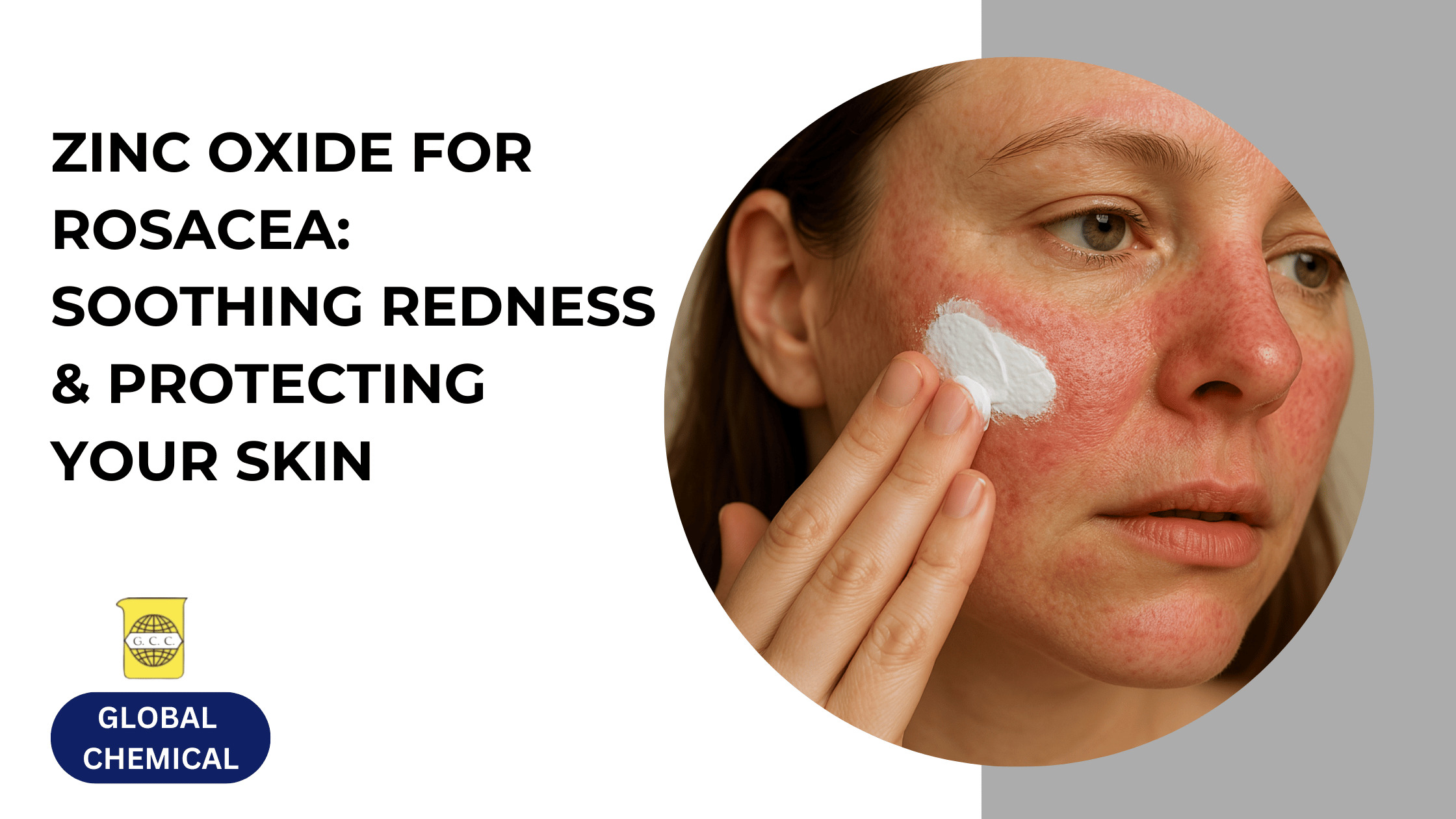
Rosacea is a chronic inflammatory skin condition associated with facial redness, flushing, visible blood vessels, and acne-like bumps. Symptoms often fluctuate, with periods of relative calm followed by flare-ups triggered by sunlight, heat, certain foods, stress, or irritating skincare products.
Zinc oxide (ZnO) can support rosacea-prone skin primarily by providing broad-spectrum sun protection in formulations that many people with sensitive skin find comfortable. Although it does not treat the underlying condition, daily use of a suitable zinc oxide sunscreen may help limit UV-triggered flare-ups and protect easily irritated skin.
What Is Rosacea?
Rosacea primarily affects the central face, including the cheeks, nose, forehead, and chin. Symptoms vary between individuals and may include persistent redness, visible facial blood vessels, burning or stinging, skin thickening, and inflammatory bumps that can resemble acne.
Rosacea is not caused by poor hygiene, and it is not contagious. Because symptoms can resemble acne, dermatitis, or other skin conditions, persistent redness and irritation should be assessed by a dermatologist.
Sun Exposure
Sunlight is one of the most commonly reported rosacea triggers. UV exposure and heat may intensify flushing, redness, and skin sensitivity, even after relatively brief periods outdoors.
The American Academy of Dermatology recommends that people with rosacea use a gentle, water-resistant, broad-spectrum sunscreen with SPF 30 or higher. Additional measures, including seeking shade and wearing a wide-brimmed hat, can further reduce exposure.
Spicy Foods and Hot Drinks
Spicy foods and hot drinks can trigger flushing in some people by increasing sensations of heat and affecting facial blood flow. However, rosacea triggers are highly individual. Keeping a symptom diary can help identify whether particular foods or beverages repeatedly precede flare-ups.
Stress and Temperature Changes
Emotional stress, strenuous exercise, hot weather, cold wind, and sudden temperature changes may also aggravate rosacea. Stress-management techniques and practical adjustments, such as exercising in a cooler environment, can help reduce exposure to personal triggers.
Recognising these patterns is important because avoiding confirmed triggers may be more effective than eliminating numerous foods, activities, or products without evidence that they cause a reaction.
How Can Zinc Oxide Help Rosacea-Prone Skin?
Zinc oxide is best known as a mineral UV filter. Its most relevant benefit for rosacea is helping protect the skin from sunlight, although suitable zinc oxide formulations may also feel less irritating than some alternatives.
Broad-Spectrum Sun Protection
Zinc oxide protects across UVA and UVB wavelengths by absorbing most UV radiation while reflecting and scattering a smaller proportion. This broad coverage is particularly useful for rosacea-prone skin because sunlight can provoke flushing and persistent redness.
A zinc oxide ingredient alone does not guarantee a particular SPF. Protection depends on the complete formulation, including particle distribution, film formation, concentration, and application. Consumers should therefore choose a finished sunscreen labelled broad-spectrum SPF 30 or higher rather than assessing protection from the ingredient list alone.
Suitability for Sensitive Skin
Many people with rosacea find mineral sunscreens containing zinc oxide, titanium dioxide, or both gentler than some organic-filter formulations. However, neither type is universally better for every person. The National Rosacea Society notes that the best sunscreen is one that can be applied consistently without irritating the skin.
The complete formula matters. Fragrance, alcohol, preservatives, botanical extracts, and other ingredients may cause stinging or redness even when zinc oxide is the active UV filter. A fragrance-free product formulated for sensitive skin is often a practical starting point.
Support for a Gentle Skincare Routine
Zinc oxide is also used in skin-protectant creams, where it can form a surface layer that limits contact with external irritants. This does not mean every zinc oxide sunscreen repairs the skin barrier or treats inflammation. Those effects depend on the formulation and its other ingredients.
Rosacea-friendly products may combine zinc oxide with moisturising or barrier-supporting ingredients. A well-formulated moisturiser can help reduce dryness and discomfort, particularly when used alongside prescribed rosacea treatment.
Visible Redness and Skin Tone
Tinted mineral sunscreens may help visually neutralise redness while reducing the white cast sometimes associated with zinc oxide. They can be particularly useful for people with medium to deep skin tones who find untinted mineral formulas visibly chalky.
Tint can improve cosmetic appearance, but it does not treat the vascular or inflammatory causes of rosacea. Persistent redness, worsening bumps, eye irritation, or skin thickening requires professional assessment.
How Should You Choose a Zinc Oxide Product for Rosacea?
Look for a facial sunscreen that provides broad-spectrum SPF 30 or higher and feels comfortable enough for daily use. A rosacea-friendly formula will usually have a short, gentle ingredient list and should ideally be fragrance-free.
Useful product characteristics include:
- Zinc oxide, titanium dioxide, or both as mineral UV filters
- Broad-spectrum SPF 30 or higher
- Fragrance-free rather than merely unscented
- A cream or lotion texture that does not sting
- Water resistance when sweating or spending time outdoors
- A tinted or micronised finish if white cast is a concern
“Non-comedogenic” may be useful for people who also experience acne-like bumps, but this claim relates to the complete product rather than zinc oxide alone. People with very reactive skin should patch-test a new formula on a small area before applying it across the face.
Manufacturers developing rosacea-friendly products must also consider particle characteristics, purity, dispersion, texture, and compatibility with sensitive-skin formulations. Choosing the appropriate zinc oxide cosmetics grade is therefore more important than selecting an ingredient based solely on concentration.
How Should Zinc Oxide Sunscreen Be Applied?
Apply sunscreen as the final step in the morning skincare routine, after any prescribed medication and moisturiser have settled. Use it on the entire face and other exposed areas rather than applying it only where redness is visible.
Reapply according to the label, particularly after sweating, swimming, wiping the face, or prolonged outdoor exposure. Sunscreen should be combined with shade, protective clothing, sunglasses, and a wide-brimmed hat because no product blocks all UV radiation.
Avoid rubbing or massaging rosacea-prone skin aggressively during application. Spreading the product gently with the fingertips can reduce unnecessary friction.
What Should You Avoid When Using Zinc Oxide for Rosacea?
Avoid assuming that “mineral,” “natural,” or “for sensitive skin” automatically means irritation-free. Rosacea can react to ingredients elsewhere in the formula, including fragrance, drying alcohols, essential oils, exfoliating acids, and abrasive particles.
Introducing several new products simultaneously can make reactions difficult to identify. Add one product at a time and stop using it if persistent burning, itching, swelling, or worsening redness occurs.
Zinc oxide sunscreen should not replace medication prescribed for rosacea. It is a supportive part of symptom management, particularly for controlling sun exposure, rather than a cure for the condition.
What Are the Long-Term Benefits of Daily Sun Protection?
Consistent sun protection may reduce exposure to one of the most common rosacea triggers and help prevent UV-related skin damage. The benefit comes from regular use of a suitable finished sunscreen rather than zinc oxide functioning as a standalone treatment.
A tolerable formula may also make adherence easier. Applying sunscreen every day is more useful than choosing a theoretically ideal product that feels uncomfortable and is rarely worn.
For more guidance on choosing a suitable formulation, check out our blog about zinc oxide for sensitive skin. To understand how the two main mineral filters differ, check out our blog comparing zinc oxide and titanium dioxide in sunscreen.
Manufacturers should source materials from experienced zinc oxide suppliers that can provide consistent specifications, quality documentation, and the appropriate grade for cosmetic applications. For additional formulation context, check out our blog on micronised zinc oxide in modern skincare.
Conclusion
Zinc oxide can be a useful part of a rosacea skincare routine because it provides broad-spectrum UV protection and is often well tolerated in gentle mineral sunscreen formulations. It should support, rather than replace, professional treatment and careful trigger management. At glochem, we help formulators source consistent materials from experienced zinc oxide manufacturers while recognising that the safety, comfort, and performance of a rosacea-friendly product depend on its complete formulation.
FAQ
Does zinc oxide cure rosacea?
No. Zinc oxide does not cure rosacea. Its primary role is to protect the skin from UV radiation, which is a common trigger for flare-ups. Medical treatment may still be needed to manage persistent redness, bumps, visible blood vessels, or eye symptoms.
Is zinc oxide sunscreen suitable for daily use?
Yes, provided the finished product is comfortable and does not irritate the skin. Choose broad-spectrum SPF 30 or higher and follow the application and reapplication instructions on the label.
Can zinc oxide reduce facial redness?
Zinc oxide sunscreen may help prevent sunlight from worsening redness. Tinted formulas can also visually neutralise redness, but zinc oxide should not be expected to eliminate the underlying vascular or inflammatory symptoms.
Can zinc oxide clog pores?
Zinc oxide itself does not determine whether a product will clog pores. People with acne-like rosacea bumps should evaluate the complete formulation and may prefer a product labelled non-comedogenic.
Is mineral sunscreen always better for rosacea?
Not always. Many people with rosacea find mineral sunscreen gentler, but some tolerate organic UV filters well. The best option is a broad-spectrum sunscreen that does not sting or worsen symptoms and can be used consistently.
How can you avoid a white cast from zinc oxide?
Choose a tinted or micronised mineral sunscreen and apply it in thin, even layers. Tinted formulas may blend more naturally with medium and deep skin tones while helping camouflage visible redness.
